|
|
Home
| Gallery
| About
| Awards
| Links
| History of Trophy Fish Carving
| Studio
| Carvers
| Their Carvings
| World Championships | Blog | Fishcarving Forum | Contact |
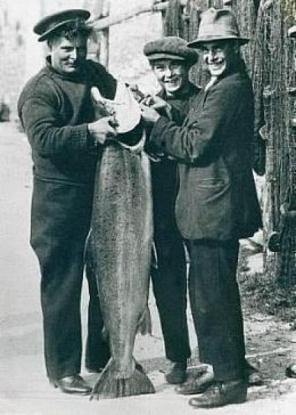
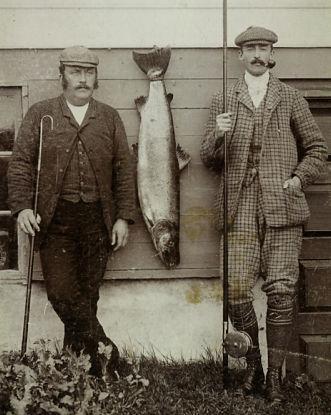
River Exe, England- 1924 Click photo to enlarge
Click photo to enlarge
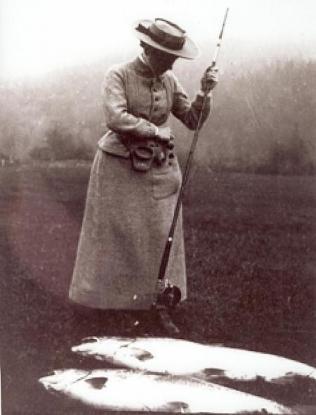
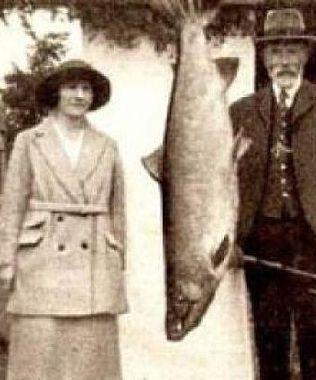
61 Lb. Atlantic Salmon Clementine Morison- 1924 River Deveron, Scotland Click photo to enlarge
Click photo to enlarge
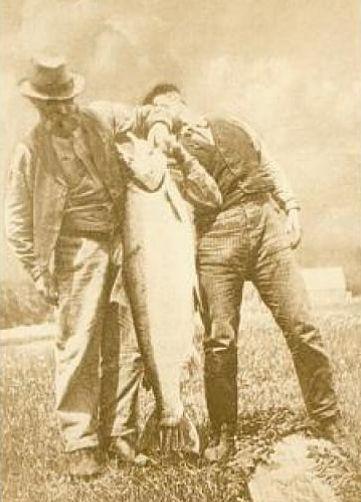
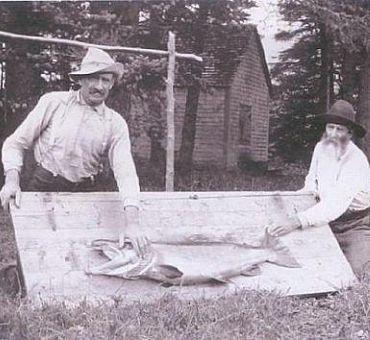
Quebec, Canada - circa 1860 Click photo to enlarge
Click photo to enlarge
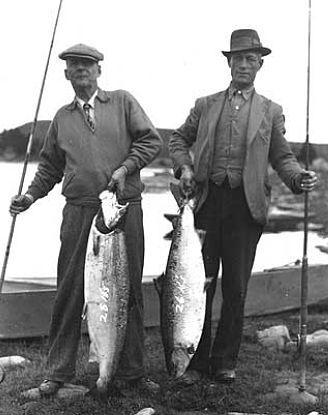
Newfoundland, Canada Click photo to enlarge
Click photo to enlarge
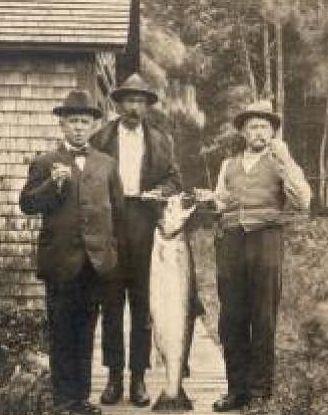
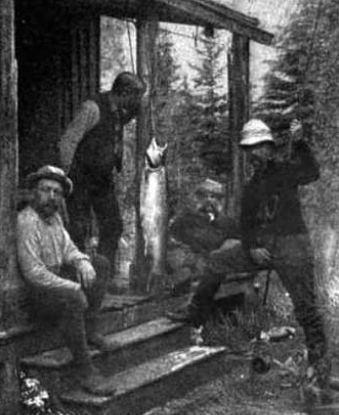
Quebec, Canada - circa 1880 Click photo to enlarge
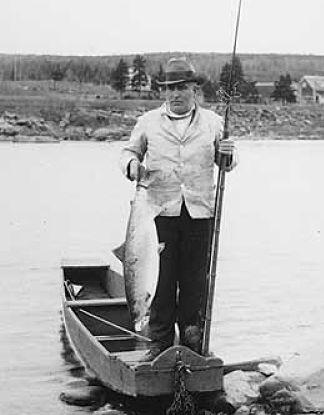
New Brunswick, Canada Click photo to enlarge
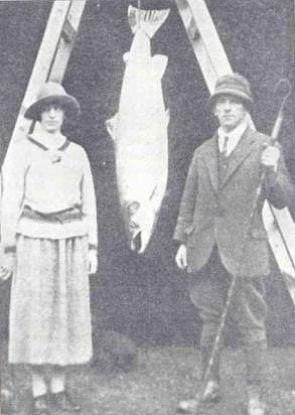
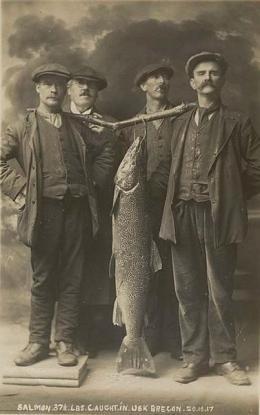
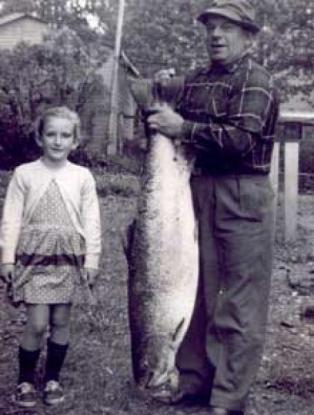
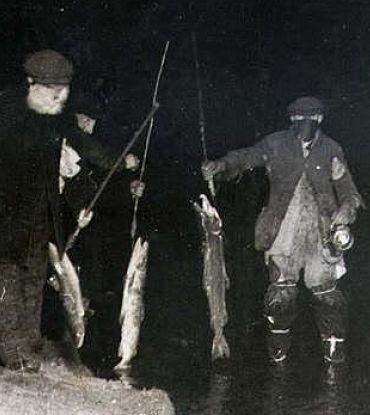
River Edw, UK. -1934 Click photo to enlarge
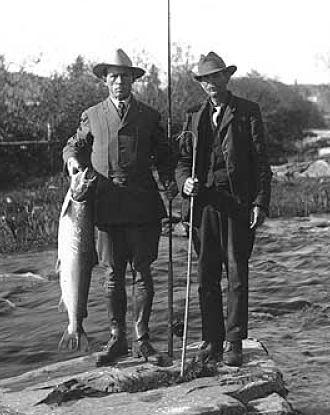
River Ithon, UK. - c. 1910 Click photo to enlarge
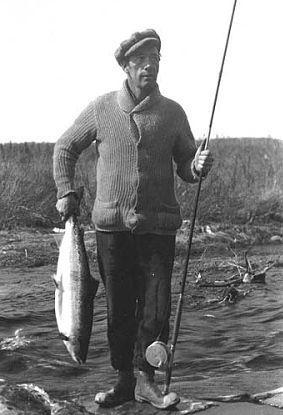
River Wye, UK. Click photo to enlarge |
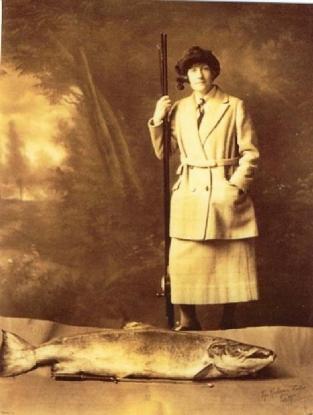
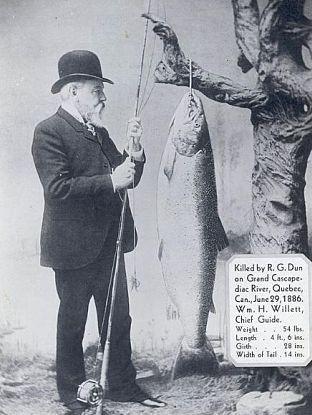
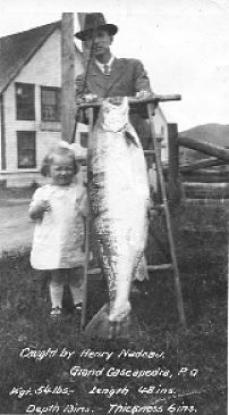
In Celtic mythology, the salmon was the symbol of wisdom, and those who ate the flesh of the first salmon of the year were blessed with this gift. Today, at Kenmore, Scotland, the first day of the salmon season is still marked with ceremony: a quaich of whisky is poured as a libation over the prow of the first boat, while the bagpipes skirl. No other fish offers such a combination of size and speed, giant jumps, superb spirit and magical mystique as the Atlantic Salmon. It's relation to man has been truly unique. Izaak Walton crowned it the "King of Freshwater Fish" in his 17th century book, the Complete Angler. The Atlantic Salmon is anadromous, in that it spawns in freshwater streams; the adults return to sea and the young remain in freshwater for 2 or 3 years. When the fish are about 15cm in length, they migrate to the sea where they may live for 1, 2 or more years before returning to freshwater to spawn. Found on both sides of the North Atlantic Ocean, they occur along the coasts of Sweden, Norway, Finland, Iceland, and Russia; southward along the British Isles and the coast of Western Europe and south to Spain. On the western side of the Atlantic, it ranges from Ungava Bay, Davis Straits, Greenland, along the Labrador coast, Newfoundland, Quebec, Maritime provinces and south to the Connecticut River. The largest United Kingdom rod caught salmon was by Georgina Ballantyne in the River Tay in 1922. It weighed 64 pounds and took nearly two hours to land. Present day fishing in Scotland was shaped by the Victorians. Wealthy families sought escape from city life in favour of their homes and lodges in the country. Estates were established and some were huge. It is recorded that the fishing on the whole of the River Spey was held by just six estates. Many of the great tackle manufactures were founded around the 1850's, likely due to the increase in demand for quality fishing tackle. Their innovative approach to tackle design is still reflected in present day tackle. No longer were salmon played on a "tight line" or line tied to the rod tip, but rather a "loose line" which ran through rod rings to a reel, and thus a greater chance to land big salmon. The first national trout fly fishing competition took place July 1, 1880 in Scotland, and later developed into the prestigious Scottish National Fly Fishing Championship. Canadian singer Leonard Cohen So Long Marianne RIVER TAY SCOTLAND,UK The River Tay is perhaps the most famous salmon river in the British Isles. It is the largest river in Britain and has the greatest flow in Scotland. On the River Tay, as in all other rivers in Scotland, the rights to fish for salmon are privately owned by numerous owners and fishing can be obtained by purchasing a permit from an owner to fish his or her particular stretch. The river is managed by the Tay District Salmon Fisheries Board. An early depiction of the salmon dating to the Pictish period, can be seen in the Perth Museum, on the famous Inchyra carved stone. To some extent, angling for salmon had always been practiced for centuries but in the 19th century, it became an increasingly popular sport. The British rod and line caught salmon of 64lbs. was caught on the River Tay by Miss Georgina Ballantine in 1922. This record still stands and the fish is on display at the Perth Museum. SCOTLAND, UK The River Tweed has always been internationally famous for it's salmon fishing, with anglers coming from all over the world to fish it. More salmon is currently caught on the Tweed than from any other river in Britain, and ranks among the very top salmon rivers in the world. The Tweed is the second longest river in Scotland at 98 miles, with a staggering 1500 sq. miles of catchment area. It regularly produces over 10,000 salmon per year. Visitors not only come for the fishing, but to take-in thousands of years of history. The Tweed River has a long and bloody history, with many famous battles dating back to at least 1018. Watch the YouTube video just below, to see Atlantic Salmon in the River Tweed.RIVER TWEED SCOTLAND QUEBEC, CANADA One of the world's greatest and most historic salmon rivers.The Cascapedia River is located in the Gaspé Peninsula of the province of Quebec and empties into Baie de la Cascapédia. In the 1880's, fishing in Canadian rivers was becoming a well established sport that required money and connections to acquire the rights for the priviledge to fish. The Quebec Government felt that by leasing the river's fishing rights to the highest bidder, they would be making money as well as passing on responsibility of managing the rivers to the leasers. It also meant the American and Canadian anglers would become guardians of the river, willing to spend what it would take to safeguard their investment. The river has been managed since 1981 by a local coalition called The Cascapedia Society. Although the wealthy Canadian and American anglers who own many of the private camps on the Cascapedia have an enormous impact on the local economy, they have no official representation on the board of the Society. Just 40 anglers are allowed on 125km of prime salmon fishing each day. The average salmon caught is 20 lb. Watch the YouTube video just below, to see fishing on the Grand Cascapedia River.GRAND CASCAPEDIA RIVER QUEBEC, CANADA Sound disabled by Youtube? SCOTLAND, UK One of Scotland's big four salmon rivers, some say the river Spey is probably the most famous salmon river in the world. It's major attraction is it's size and the strength of it's stream. In the middle and lower river it falls on average 12ft. per mile- the greatest of any British river. It is on the lower half of the Spey that the most famous beats are, and where the cream of Scottish salmon fishing is to be had, by those fortunate enough to have access to them. There are several angling associations on the Spey, who control some excellent beats, many of them available to the visiting angler. Spey Casting was developed on the River Spey due to the dense vegetation on it's banks and the erratic winds. Not only do you minimize the line carried behind you, but with a two-hand rod, less effort is required to cast. Being longer, two-handed rods manage and control the fly line better. Spey rods can handle longer lengths of line and changing direction of cast is easier. Watch the YouTube video just below, to see Spey Casting in Scotland.SCOTLAND,UK NEW BRUNSWICK, CANADA Starting in the 19th century, salmon angling gained in popularity until it reached a multi-million dollar business in the mid to latter part of the 20th century. The river has drawn the rich and famous eager to find refuge from hectic paces, in the tranquility of a Miramichi salmon pool. Some say the river is the greatest Atlantic Salmon river in the world. The Miramichi river valley system in New Brunswick is comprised of 37 major tributaries containing 7,700 individual streams. The river meander length measures about 250 km and comprises two important branches, the Southwest Miramichi and the Northwest Miramichi. Many stretches of the main rivers and tributaries are privately owned or leased by fishing clubs and camps, and well-established outfitters and guides. "People water" that is available to all is very limited. Some outfitters specialize in re-creating the ambience and charm of the legendary fishing camps of the 1920's and 1930's. Angling is restricted to fly fishing only and all large salmon caught must be released alive to protect the spawning population. About one-half of the sport catch Atlantic Salmon in North America are landed on the Miramichi and it's tributaries currently. SCOTLAND, UK It has been called the "Silver Dee," and it fully deserves that title. Many would say that it is the most attractive of all the larger Scottish salmon rivers, as well as one of the most prolific in fish. It is a lovely, tumbling, fast flowing river of crystal clear water, so clear that it is often hard to estimate its depth. For the whole of its course, the Dee has practically every advantage that could be desired in a salmon river. One of the top four British salmon rivers,the River Dee has the reputation as one of the greatest salmon rivers, and anglers come from all over the world to fish it. Since as early as the 17th century, anglers have fished the River Dee. The Dee is one of the earliest producing rivers in Scotland and takes great pride in the fact that it produces more spring fish caught to the fly than many others in Britain. NORWAY In far northern Norway, so far north that the Arctic Circle is 300 miles to the south, runs a river that is legendary among sports anglers. Its name is the Alta, and its claim is the biggest salmon in the world. The river is remote. It plunges through a steep, rock strewn gorge that has not a single road, bridge, telephone pole or any other sign of civilization to mar its rugged beauty. It is exclusive, closed to the public most of the summer. Those who fish it(limited to 10 along 34 miles at any one time) reputedly pay $15,000 per week. The Alta's exclusivity goes back about 150 years, when the first English nobility found it far superior to their own streams. Since then, a procession of dukes, dutchesses, earls, viscounts, and barons have rented the river. Watch the YouTube video just below, to see Alta River fishing.ALTA RIVER NORWAY NEW BRUNSWICK, CANADA The river is world-renowned for its Atlantic Salmon fishing. Angling has become a significant source of revenue for many outfitters in the region and a 55km stretch of the Restigouche has been designated part of the Canadian Heritage Rivers System. For more than 100 years, the world's wealthiest people have come to enjoy the river's tranquil beauty and perfect canoeing conditions to fish for salmon. The river flows across the northwestern part of New Brunswick and the southeastern part of Quebec. Its meander length is approximately 200km. The New Brunswick government auctions fishing leases for various sections of the river to the highest bidder. Many private fishing lodges have been established, which are owned and operated by major corporations and the wealthy. The leases are time limited and for the best fishing pools, they can run into the millions of dollars. The general public are permitted right of navigation on the river, however they are not permitted to drop anchor, and absolutely not permitted to fish in any leased area. Watch the YouTube video just below, to see Restigouche River fishing.RESTIGOUCHE RIVER CANADA The following Youtube video is performed by David Chittick of Australia, and I would like to thank David for allowing me to place his video on my site. |
64 Lbs., 54" Lg., girth 28 1/8" Georgina Ballantine -1922 River Tay, Scotland Click photo to enlarge
Click photo to enlarge
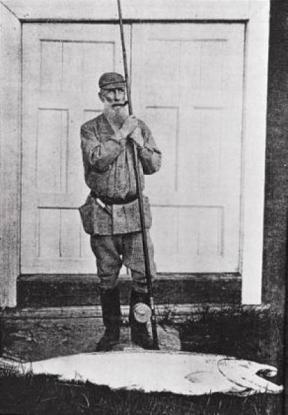
Grand Cascapedia River Click photo to enlarge
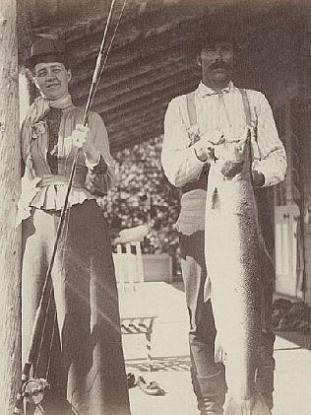
Grand Cascapedia River 1886 Click photo to enlarge
Click photo to enlarge
Cascapedia River, Quebec Click photo to enlarge
Click photo to enlarge
Braunton, England Click photo to enlarge
Cascapedia River, Quebec, Canada Click photo to enlarge
Newfoundland, Canada Click photo to enlarge
Nova Scotia, Canada Click photo to enlarge
New Brunswick, Canada Click photo to enlarge
Newfoundland, Canada Click photo to enlarge
|